


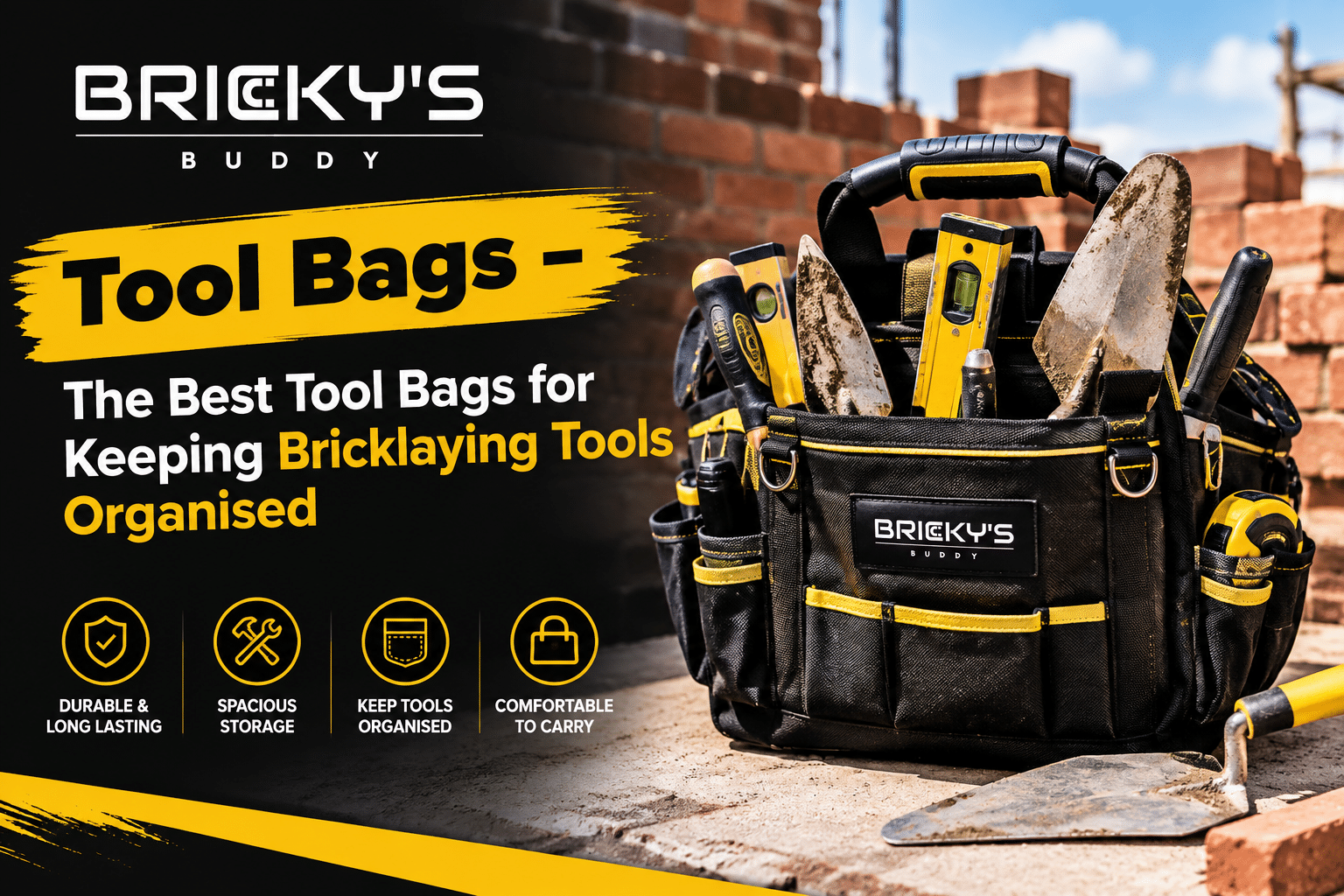
Tool Bags – The Best Tool Bags for Keeping Bricklaying Tools Organised
Objective
Our goal is to help you choose a practical bricklayer’s tool bag based on the tools you carry, the way you work and the storage you actually need.
Key Takeaways
- Choose a Tool Bag around your everyday bricklaying tools, not simply its size.
- Pockets, dividers and easy access can make tool organisation much simpler.
- Open totes, zipped bags, backpacks and a Tool pouch each suit different needs.
- A good builder’s tool bag should be durable enough for regular site use.
- A bag and Tool Belt for Bricklayers can work together when you need some tools close at hand.
Introduction
If you work with a trowel, spirit level, tape measure, hammer and other bricky tools every day, keeping them together is only part of the job. You also need to reach the right tool quickly, protect your equipment and carry it comfortably between work areas. That is where the right Tool Bags can make a practical difference. Bricky’s Buddy’s current range includes open totes, zipped tool bags, backpacks, a spirit level carry bag and a multi-purpose bag, giving you different storage options for different working needs.
HSE guidance also stresses the need to assess and control lifting and carrying risks on construction sites. In this guide, we look at what makes a good bricklayer’s tool bag, how to organise your tools and which storage option may suit your daily work.
Table of Contents
- What Is a Bricklayer’s Tool Bag?
- What Should You Look for in Tool Bags?
- Which Tool Bag Is Right for You?
- How to Organise Your Bricky Tools
- A Practical Tool Bag Example
- Choose a Tool Bag That Fits Your Working Day
- FAQ’s
What Is a Bricklayer’s Tool Bag?
A bricklayer’s tool bag is portable storage made to carry and organise the hand tools and accessories used during bricklaying and other site work. Unlike a basic bag, a purpose-built tradesman’s tool bag can include separate pockets, compartments, dividers and different carrying options.
A typical bricklaying kit may include trowels, chisels, tape measures, spirit levels, brushes and other small site tools. The aim is simple: keep the tools you use most often easy to find and ready to carry. A specialist bricklaying supplier also lists jointers, trowels, corner blocks, lines and a brick hammer among common bricklaying tools.
What Should You Look for in Tool Bags?
1. Practical storage
More pockets are not always better. What matters is whether the layout suits your kit. Look for space for larger tools, smaller accessories and items you need to reach often.
2. Strong construction
A heavy-duty tool bag should cope with regular site use. Check the fabric, stitching, handles and base before buying.
3. Easy access
An open tote can make frequently used tools quick to reach, while a zipped bag can keep equipment contained during transport.
4. Carrying options
Handles, shoulder straps and backpack designs each have a place. Choose according to how far you normally carry your tools and how much equipment you take.
The HSE says manual handling accounts for most non-fatal injuries in construction and advises businesses to assess and control manual-handling risks. A tool bag is not a safety solution by itself, but sensible organisation and carrying practices are part of good site planning.
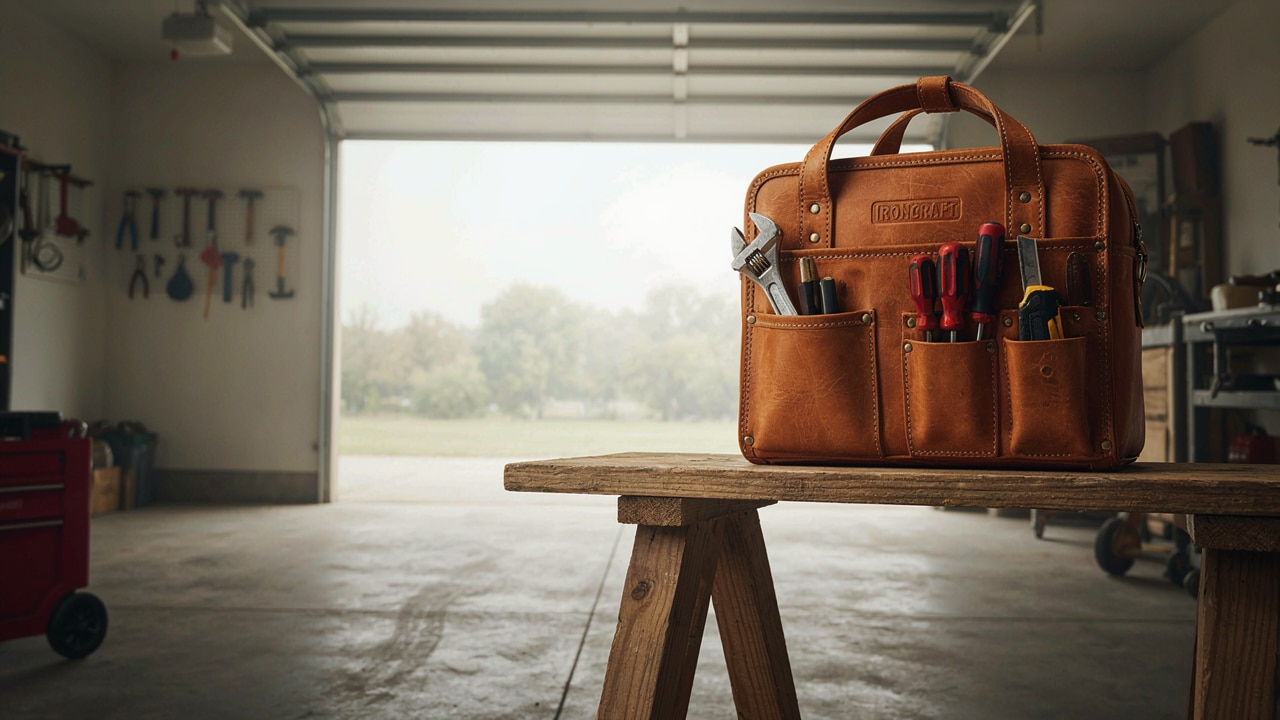
Which Tool Bag Is Right for You?
Your main need/Storage option to consider
| Your main need | Storage option to consider |
| Quick access to everyday tools | Open tote |
| Enclosed storage during transport | Zipped tool bag |
| Hands-free carrying | Tool backpack |
| Small tools and fixings | Tool pouch |
| Long specialist equipment | Dedicated carry bag |
For example, the Bricky’s Buddy Open Tote Bag has a reinforced moulded waterproof base, internal and external pockets, a removable divider, twin handles and an adjustable shoulder strap. It is designed to carry items such as trowels, chisels, tape measures and spirit levels.
The range also includes a 19-inch Contractor Zip Tool Bag for enclosed storage, while the Contractor Tool Backpack provides another option for tradespeople who prefer backpack-style carrying.
How to Organise Your Bricky Tools
Here’s a simple system you can use:
Step 1: Keep your most-used tools in the easiest-to-reach pockets.
Step 2: Storage of smaller items like pencils and line accessories in one place.
Step 3: Maintain bigger tools like trowels and chisels within the main compartment.
Step 4: Remove damaged or unused items regularly so your bag does not become overloaded.
A tool bag organiser should make your working day simpler, not give you another place to lose things.
For smaller equipment, a Tool pouch can work alongside your main bag. The Bricky’s Buddy pouch is made from ballistic poly fabric, has reinforced edges and multiple pockets, and can be attached to a work belt or tool rig.
A Practical Tool Bag Example
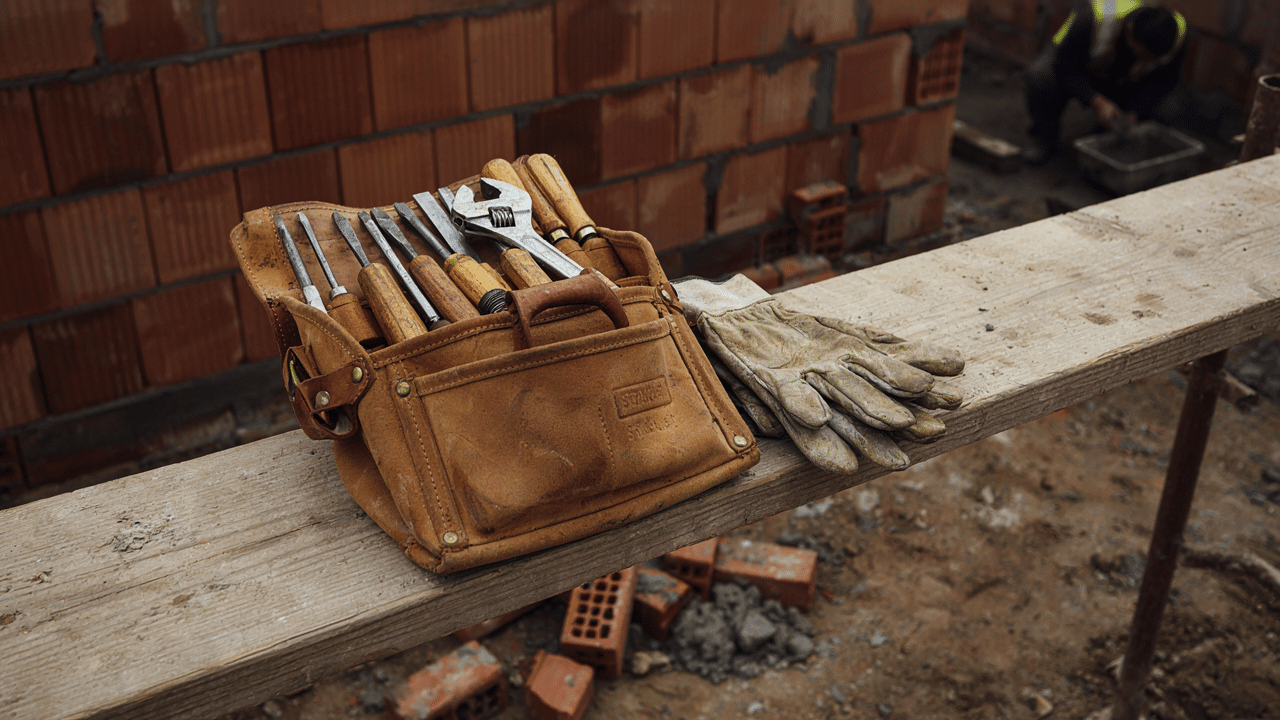
Imagine you arrive on site with your trowel, tape measure, spirit level, jointers, hammer and smaller accessories. Instead of putting everything into one large compartment, you keep frequently used tools in accessible pockets, larger equipment in the main section and small items in a pouch.
That small change means you know where to look when you need something. At the end of the day, putting everything back in its usual place also makes your next start easier.
The Multi-Purpose Tool Bag is another practical example, with five external pockets, four internal pockets and a clear zipped pocket for plans, permits or paperwork.
Choose a Tool Bag That Fits Your Working Day
The best Tool Bags are not necessarily the largest ones. Start with your own kit. Count the tools you carry every day, decide which need quick access and then choose the storage format that suits your routine.
If you need more than one storage method, combine a main bag with a pouch or belt system. The result can be a cleaner, more practical setup without carrying equipment you rarely use.
Ready to Organise Your Bricklaying Kit?
Take a look at the Bricky’s Buddy range of tool storage options and choose the combination that fits the way you work.
Frequently Asked Questions
What should a bricklayer keep in a tool bag?
Common items include trowels, chisels, a tape measure, spirit level, brick hammer, jointers, line accessories and smaller everyday tools.
Is an open tool bag better for bricklayers?
It can be useful when you need quick access to frequently used tools. A zipped design may suit you better if you prefer enclosed storage during transport.
Is a Tool pouch useful for bricklaying?
Yes. A pouch can help keep smaller tools, fixatives and accessories at hand, while your main bag is able to store bigger tools and equipment.
What makes a good heavy-duty tool bag?
Look for durable construction, functional compartments, sturdy carrying points and a base that is suitable for regular usage on construction sites.
How can we keep bricklaying tools organised?
Make sure to give each kind of tool a consistent storage space, keep regularly used tools within reach and eliminate unnecessary equipment from your bag on a regular basis.