


Bricklayer Tools – Essential Bricklayer Tools Every Professional Should Own
Objective
Our aim is to help you build a practical professional toolkit by explaining the essential bricklaying tools, Masonry Tools and bricklaying accessories worth having on site.
Key Takeaways
- A brick trowel, level, tape measure and brick line form the core toolkit.
- Cutting and jointing require the right specialist masonry tools.
- A bricklayer’s tool belt and tool bag help keep frequently used items organised.
- A Magnetic Trowel Holder can keep your trowel within easy reach.
- Good tool organisation should support safe, efficient working practices.
Introduction
A professional bricklayer relies on more than a good trowel. The right bricklayer tools help you measure accurately, lay bricks consistently, shape mortar and finish joints properly. Your everyday bricklaying tools should also be easy to carry, store and reach when you are working on site.
The challenge is knowing which Masonry Tools are essential and which are simply useful extras. A brick trowel, spirit level, tape measure, brick line and pins form the basic kit, while tools such as a bricklayer’s tool belt, tool bag and Magnetic Trowel Holder can make your working setup more practical.
There is also a safety reason to think about where your tools are kept. The UK Health and Safety Executive notes that masonry work can involve repeated handling, twisting, stooping and reaching, and recommends arranging work areas to reduce unnecessary reaching and twisting.
In this guide, we will break down the essential bricklaying tools every professional should consider, explain what each one is used for, and show how the right bricklaying accessories can help you keep your working kit organised and within easy reach.
Table of Contents
- Essential bricklaying tools
- Tools for measuring and setting out
- Cutting and finishing tools
- Bricklaying equipment and accessories
- Why tool organisation matters
- Building your professional toolkit
- FAQs
1. Essential Bricklaying Tools Every Professional Needs
If we strip a bricklayer’s kit back to the basics, several tools bricklaying professionals use repeatedly stand out.
| Tool | Main use | Priority |
| Brick trowel | Spreading and handling mortar | Essential |
| Spirit level | Checking alignment | Essential |
| Tape measure | Measuring and setting out | Essential |
| Brick line and pins | Keeping courses straight | Essential |
| Brick hammer | Adjusting bricks | Essential |
| Pointing trowel | Finishing joints | Essential |
| Bolster/chisel | Controlled cutting | Useful |
| Tool bag | Carrying equipment | Useful |
A professional bricklayer also needs to know how to maintain and store hand tools and associated equipment. This is included within the occupational skills and knowledge for bricklaying apprenticeships.
2. Measuring and Setting-Out Tools
Accuracy starts before the first brick is laid.
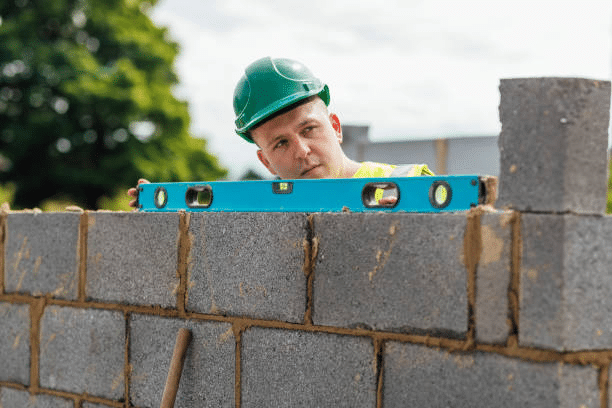
A spirit level confirms if a surface is level horizontally or vertically. A tape measure is used to check the dimensions. Brick lines and pins help you maintain a consistent, straight line.
Profiles and other setting-out equipment may also be needed depending on the job. The UK bricklaying occupational profile specifically includes levels, lines, profiles, tape measures and pegs among the resources used for bricklaying work.
Here’s the thing: a good tool kit cannot correct poor setting out. Take the time to measure properly before you start laying.
3. Cutting, Jointing and Finishing Tools
Different stages of brickwork call for different Masonry Tools.
A brick hammer can help with controlled adjustments, while a bolster or brick chisel can be used where a more precise cut is required. For finishing, a pointing trowel or jointer helps create the required mortar joint.
Keep your tools clean as you work. Dried mortar can affect how comfortably a tool performs and makes later cleaning harder.
Your choice should also match the work. A new-build wall, restoration project and repointing job will not always require exactly the same kit.
4. Bricklaying Equipment and Accessories That Make Work Easier
Once your core bricklaying equipment is covered, think about how you carry and access it.
A bricklayer’s tool bag is useful for storing tools that you do not need every few seconds. A Tool Belt with Pouches can keep smaller, frequently used items closer to hand.
This is where a Magnetic Trowel Holder can solve a simple but common problem: where do you put your trowel when both hands are needed?
The Bricky Buddy trowel holder uses high-grade neodymium magnets and a belt attachment to keep a compatible trowel accessible. The large model is listed for bricklaying, blockwork, masonry and general construction, and is made in the UK.
Bricky’s Buddy also offers tool pouches, hammer holders, tape measure holders and different belt options, allowing you to build an organisation system around the tools you use most.
5. Why Tool Organisation Matters on Site
Tool organisation is about more than keeping your kit tidy.
HSE notes that masonry work can involve repetitive handling, twisting, stooping and reaching. Its guidance recommends arranging work areas to reduce unnecessary over-reaching and twisting, and keeping mortar boards at a comfortable working height.
That gives us a useful rule: keep the tools you use most within easy reach, while keeping the rest safely stored.
For example, rather than placing your trowel on the wall or scaffold every time you need both hands, a suitable holder can keep it close to your side. This does not remove the need for safe working practices, but it can make your tool setup more practical.
6. Build Your Professional Bricklayer Toolkit
Start with the tools you genuinely use every day:
- Buy the essential hand tools first.
- Choose tools suited to your type of brickwork.
- Add specialist cutting and finishing tools when your work requires them.
- Use a bricklayer’s tool belt or bag for organised access.
- Add useful bricklaying accessories only when they solve a real problem.
- Clean, inspect and store your tools after each job.
For apprentices, this approach also avoids spending money on equipment you may rarely use.
A better way to think about your toolkit
Your best toolkit is not the one with the most items. It is the one that supports your working method, keeps essential tools accessible and contains equipment you can rely on.
Conclusion: Build a Toolkit That Works as Hard as You Do
Good bricklayer tools support good workmanship. Your trowel, level, tape measure, line and hammer form the foundation, while the right bricklaying accessories can make your daily setup more organised.
If you regularly find yourself putting your trowel down, searching for tools or reaching unnecessarily, review how your belt and tool storage are arranged.
Ready to improve your tool setup? Check out the magnetic trowel holders, belts, pouches and other accessories at Bricky’s Buddy to find easy ways to draw frequently used tools closer to you.
FAQs About Bricklayer Tools
1. What tools does a professional bricklayer need?
The core kit usually includes a brick trowel, spirit level, tape measure, brick line and pins, brick hammer and pointing tools. The exact kit depends on the work.
2. What is the most important bricklaying tool?
A brick trowel. It is the tool utilised to handle and spread mortar during the process of bricklaying.
3. What should go in a bricklayer’s tool belt?
Keep your frequently used items convenient to reach, including a tape measure and hammer. A tool belt should be used to avoid carrying too much weight.
4. Are magnetic trowel holders useful for bricklayers?
These magnetic holders keep a trowel handy and compact when both hands are needed. A magnetic holder should only be used per the instructions provided with the holder.
5. What should a bricklaying apprentice buy first?
The first purchase for a bricklaying apprentice should include a tool belt, essential hand tools, measuring devices, and finishing tools. The rest of the kit can be added when required.