


Objective
This blog explains how line blocks work, how to use them correctly and how to choose suitable bricklaying equipment for accurate, consistent brickwork.
Key takeaways
- Line blocks are used to hold a bricklaying line in position in order to guide the position of each course.
- Bricklaying line blocks need to be set up correctly to provide an effective reference point.
- Different set-ups require different types of line blocks.
- A bricklaying line is used to guide your work, but you must still check measurements and levels.
- It is important to frequently check your work for alignment errors.
Introduction
Achieving a straight brick wall requires the right tools as well as the right set-out. When constructing a garden wall or working on a larger site, line blocks are invaluable in helping you to achieve consistency in each course.
The key is knowing how to position them, keep the bricklaying line taut and check your work as you go. Here’s how to use Brick Line Blocks, understand the different options and avoid common mistakes that can affect the finish of your wall.
Table of contents
- What are line blocks?
- Types of line blocks and their uses
- How to use line blocks step by step
- Common mistakes to avoid
- How to choose the right line blocks
- Tools that support accurate brickwork
- Frequently asked questions
1. What Are Line Blocks?
Line blocks are small bricklaying aids that hold a string line and are used to provide a straight line to which a bricklayer can align bricks.
UK construction occupational standards include laying bricks and blocks to a line, measuring, marking out, levelling and using tools correctly as part of bricklaying work. This shows why line-setting is a core practical skill rather than an optional extra.
Why do bricklayers use line blocks?
Line blocks help the bricklayer to:
- Keep brick faces in a course aligned.
- Serve as an ongoing reference point for the brick placement.
- Spot areas that begin to deviate from the line.
- Reduce the need to correct avoidable placement errors.
For example, when building a long garden wall, small alignment errors can become easier to see as the wall extends. A well-positioned line gives you a reference to check against throughout the work.
Remember, the line guides your brick placement. It does not replace a spirit level, accurate measurements or proper setting out.
2. Types of Line Blocks and Their Uses
Not all Bricklaying Line Blocks attach in the same way. Your choice depends on the wall, the equipment you use and how you need to secure the line.
| Type | Main feature | What to check |
| Traditional line blocks | Hold a line at suitable wall corners | Grip and line compatibility |
| Plastic Line Blocks | Lightweight construction | Strength, shape and secure fit |
| Magnetic line blocks | Attach to compatible steel profiles | Magnetic hold and profile compatibility |
Plastic blocks can be a practical option for suitable setups, while magnetic models suit work with compatible steel profiles. Neither type removes the need to check the line before laying bricks.
For example, the Magsy Magnetic Line Block from Bricky’s Buddy is designed to attach to steel profiles. Its product instructions advise securing it at the required height before using it for alignment or measurement.
Choose your line blocks based on the job you do, not simply on their appearance.
3. How to Use Line Blocks Step by Step
Correct setup matters as much as the tool itself. Follow these steps before you start laying a course.
Step 1: Prepare the corners
Build and check your corner leads first. Use a spirit level and the required measurements to confirm that they are in the correct position.
Step 2: Secure the bricklaying line
The line is ready to be used after it has been attached to the block via the intended groove or fastening method.
Step 3: Position the second block
Secure the other end at the required height. Keep the line taut and check that it follows the intended course.
Step 4: Check the setup
Look along the line and check its position. Use a suitable line level or spirit level where needed, along with your measurements.
Step 5: Lay the bricks carefully
Place each brick so it follows the line without pushing the string out of position. Check the course as you work rather than waiting until you have laid several more bricks.
Step 6: Raise the line for the next course
Once you finish the course, reposition the line at the next required height. Check it again before continuing.
These steps follow the basic approach described in the Wonkee Donkee Tools guide to using line blocks.
4. Common Line Block Mistakes to Avoid
Small setup errors can affect the finish of a wall. Check these points before and during bricklaying.
- A loose line: Excess slack makes it harder to judge the course. Adjust the line and check its position before continuing.
- Incorrect block placement: If one block sits too high or too low, the line may give you the wrong reference. Check both ends.
- Pushing bricks against the string: The string can move when a brick presses against it. Use the line as a visual guide rather than a physical stop.
- Skipping level checks: A straight-looking line does not confirm every part of the wall is level or plumb.
- Leaving spare string loose: Secure unused line so it does not create a trip hazard around your work area.
Practical tip: If a course looks uneven, check the line and make any necessary corrections before continuing to lay bricks.
5. How to Choose the Right Line Blocks
Before buying Brick Line Blocks, consider the work you do most often.
- Material: Check if plastic or other material suits your expected use and working conditions.
- Attachment: Traditional blocks and magnetic blocks use different methods to attach the line. Ensure that the design suits your situation.
- Grip: Ensure that the block holds the line in a secure manner.
- Ease of adjustment: Consider if the block will obstruct your work when moved to another course.
- Durability: Look at the product specification and care instructions, and don’t assume every block will last the same.
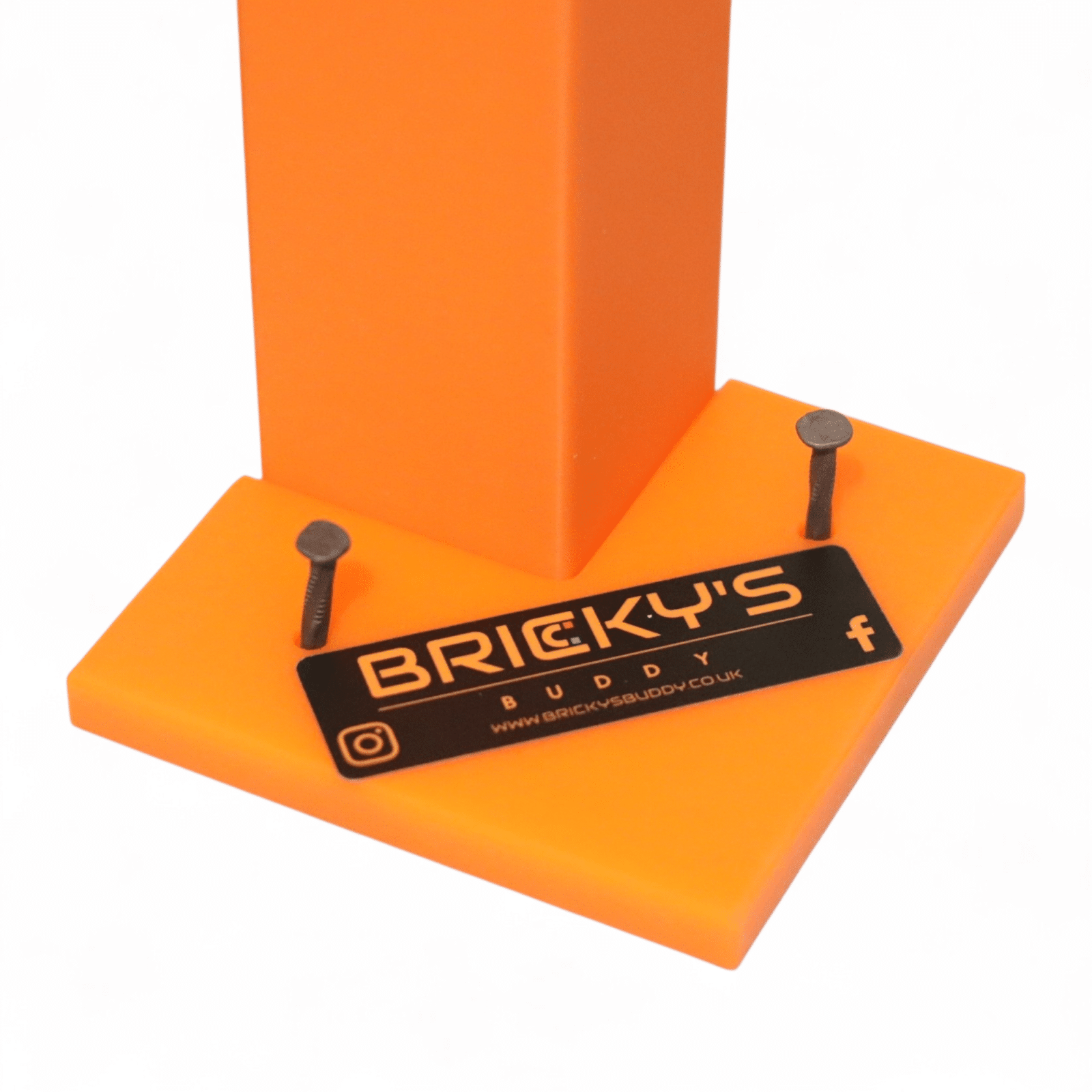
For bricklayers who use steel profiles, the Magsy Magnetic Line Block is one option to consider. Check the manufacturer’s instructions to confirm that it suits your equipment.
6. Other Tools That Help You Work Accurately
Line blocks work best as part of a well-prepared set of bricklaying tools.
A spirit level, tape measure and suitable bricklaying line help you check measurements and alignment. Corner blocks can also help with line positioning, depending on the method you use.
Keeping your tools organised makes it easier to find what you need when you need it. Bricky’s Buddy offers a multi-purpose tool bag with internal and external pockets for storing items such as string lines, tape measures and line blocks.
A suitable tool pouch or tool bag will not make a wall straight by itself, but it can help keep essential equipment within reach and reduce time spent looking for misplaced tools.
Straight Brickwork Starts with a Good Setup
Line blocks can be really helpful when setting up the horizontal lines of a wall. To get the most out of line blocks, you need to fit them to your equipment, keep the line taut, check your alignment and work in an orderly fashion.
For a better bricklaying setup, visit the Bricky’s Buddy website and check out the line block equipment that best suits you.
Frequently Asked Questions
1. What are line blocks used for in bricklaying?
Line blocks hold a bricklaying string in position between two points. The string provides a guide to help you keep bricks aligned along each course.
2. Are plastic line blocks suitable for bricklaying?
Yes, if the design of the plastic line blocks offers a good grip and is appropriate for use in your setup. Always check the specifications before use.
3. How do you keep a bricklaying line straight?
Secure both ends, apply suitable tension and check the line’s height and position before laying bricks. Avoid pressing bricks against the string, as this can move it.
4. Are magnetic line blocks better than traditional line blocks?
This depends on your equipment and the job at hand. Magnetic line blocks are better suited for some jobs, while traditional line blocks are better suited for others.
5. Do line blocks replace a spirit level?
No, line blocks and a spirit level are used to achieve different goals. A spirit level is used to check if a brick is horizontal and plumb, while line blocks are used to line up bricks horizontally. Measurements and a spirit level should be used along with line blocks.