


Objective
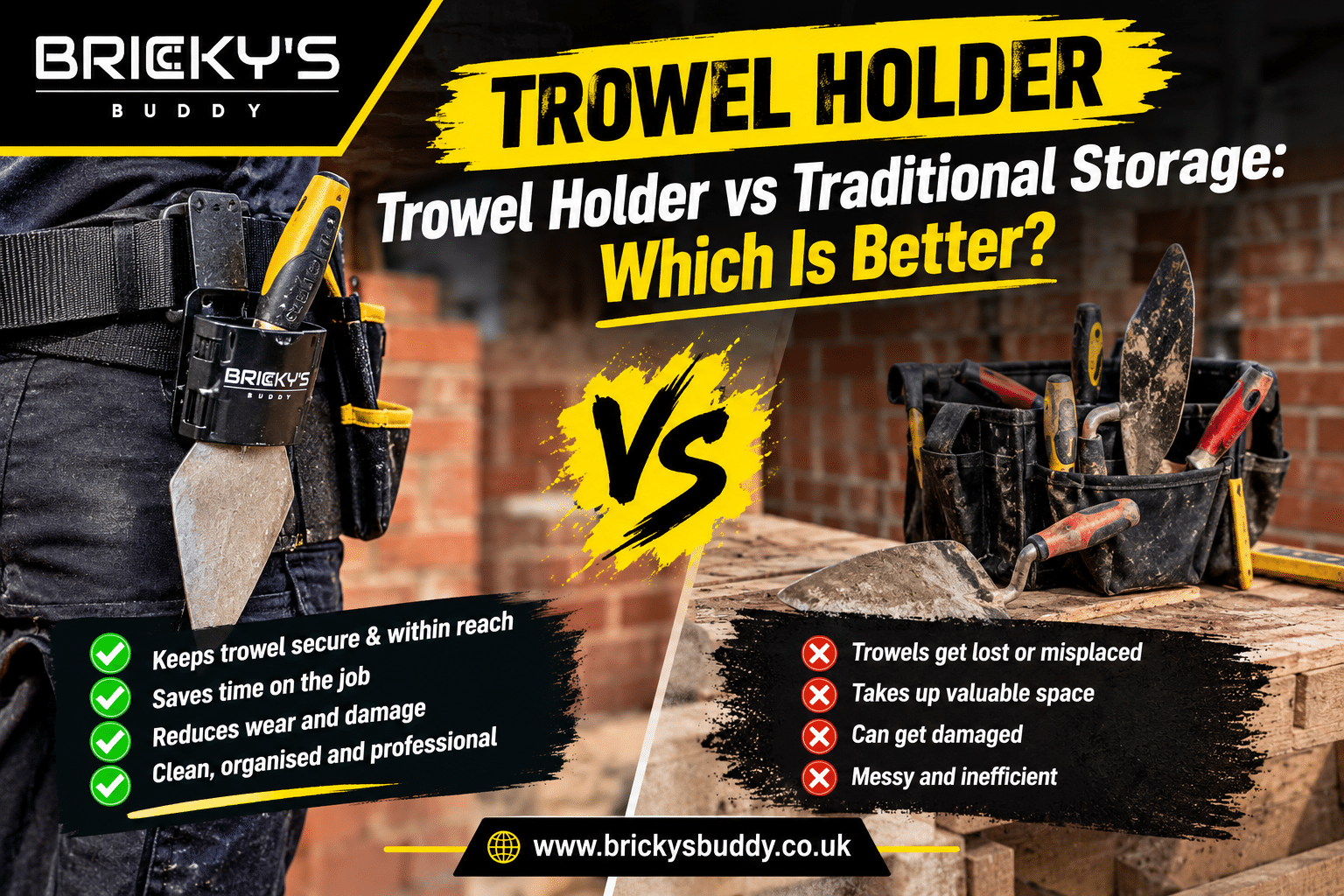
We compare dedicated trowel storage with common methods such as tool bags, mortar boards and temporary surfaces, so you can choose what suits your work.
Key Takeaways
- Traditional storage can work well for occasional or less mobile work.
- A dedicated holder keeps a frequently used trowel closer to you.
- Magnetic holders can be useful for bricklayers working across walls or scaffolding.
- Good tool organisation should reduce unnecessary reaching, bending and searching.
Introduction
You put your trowel down for only a few seconds, then realise you need it again. Now you are looking along the wall, checking the scaffold or reaching back towards the mortar board to find it. For a professional bricklayer, repeating that small task throughout the day can become frustrating and add unnecessary movement to the job.
This is where a trowel holder can offer a practical alternative to traditional storage. Instead of leaving your trowel on a wall, scaffold or the ground, you can keep it close to your side and ready when you need it.
Did you know? The UK Health and Safety Executive (HSE) notes that repeated bending and awkward postures during brick and block laying can contribute to discomfort and injury risk.
In this guide, we compare dedicated trowel storage with traditional methods, looking at access, movement, organisation and everyday use so you can decide which option fits your work best.
Table of Contents
- What Is a Trowel Holder?
- How Traditional Trowel Storage Works
- Trowel Holder vs Traditional Storage
- When a Magnetic Holder Makes Sense
- Building a Practical Bricklaying Tool Setup
- Which Storage Option Should You Choose?
- Final Thoughts
What Is a Trowel Holder?
A trowel holder is a dedicated place for carrying and storing your trowel while you work. Instead of repeatedly putting the tool on a wall, scaffold or the ground, you can keep it close to your body.
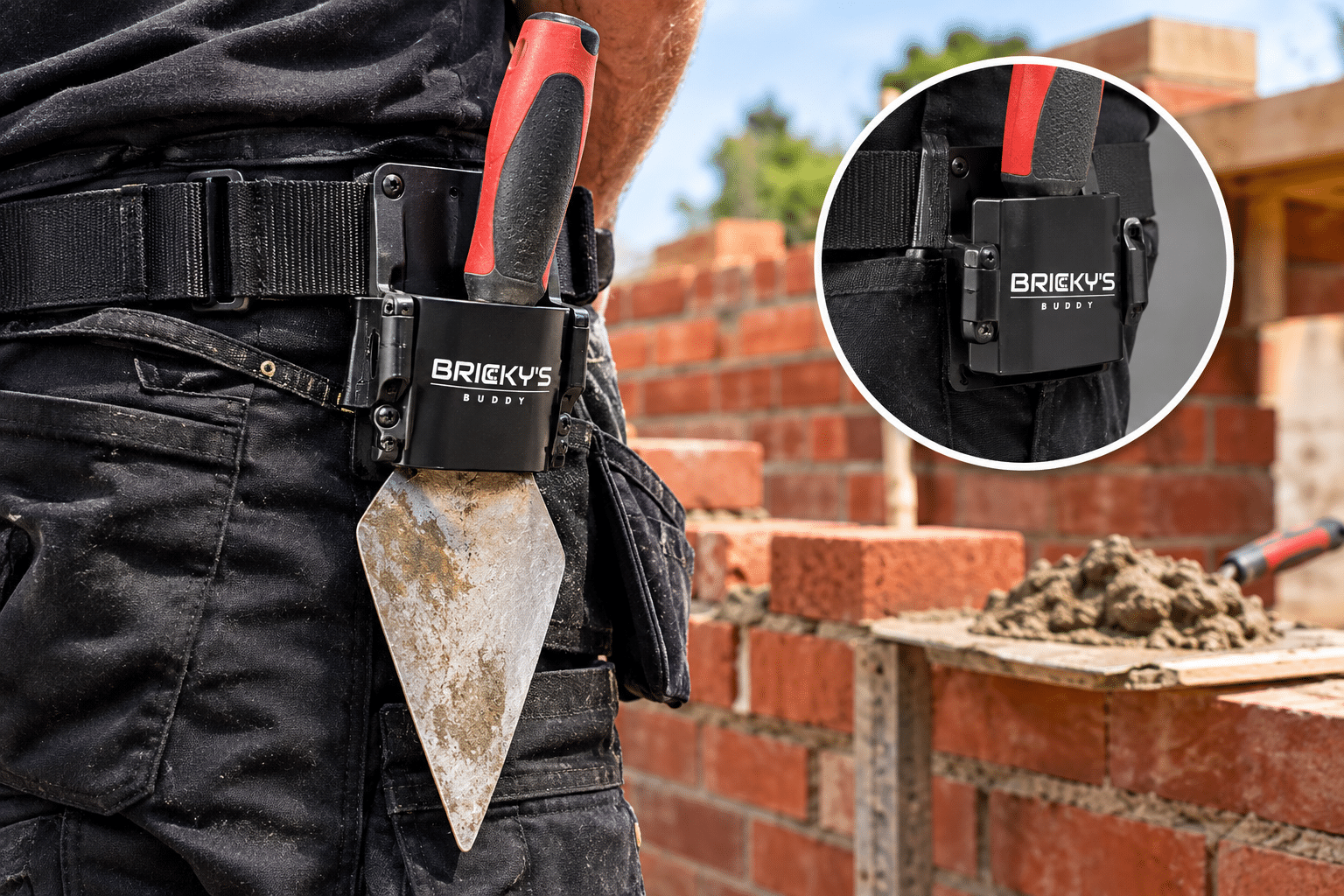
A magnetic system uses magnets to hold the trowel in place. The Bricky’s Buddy large model uses dual-sided neodymium magnets, while its mini model is designed for smaller tools such as pointing, gauging and bucket trowels.
The idea is simple: your trowel has a regular place rather than being left wherever you last used it.
How Does Traditional Trowel Storage Compare?
Traditional storage is not necessarily a bad option. Many bricklayers already have a system that works for them.
You might:
- Place the trowel on the wall while laying bricks.
- Keep it beside a mortar board.
- Put it on scaffolding between tasks.
- Store it inside a tool bag when moving around the site.
- Keep smaller tools in a belt or pouch.
The problem starts when the tool is no longer close to where you are working. HSE guidance recommends arranging work areas to reduce bending, twisting, stooping and stretching. Its bricklaying case study also notes that repeated bending to materials and mortar boards can contribute to discomfort and injury risk.
That does not mean a holder prevents injury. It simply gives you another way to organise a frequently used tool.
Trowel Holder vs Traditional Storage: What Really Changes?
Let’s break it down by everyday use.
| Factor | Dedicated magnetic holder | Traditional storage |
| Trowel access | Kept close to you | Depends where it is placed |
| Moving around | Easy to carry with you | May need repeated retrieval |
| Hands-free use | Yes | Usually limited |
| Tool organisation | Dedicated storage point | Depends on your setup |
| Occasional DIY work | May not be necessary | Often sufficient |
| Frequent bricklaying | Useful for regular access | Can involve more retrieval |
For a professional bricklayer who constantly picks up and puts down a trowel, this difference can matter. If you are working on a small DIY job and rarely move away from the tool, traditional storage may already be enough.
When Does a Magnetic Brick Trowel Holder Make Sense?
A Magnetic brick trowel holder can be particularly useful when your work involves frequent movement.
Think about a bricklayer working along a wall. The trowel may be placed on one section, then the worker moves several feet along the course. A few minutes later, the tool needs to be retrieved.
With a dedicated holder, the trowel stays with the worker instead.
The large Bricky’s Buddy model is described by the manufacturer as lightweight, impact-resistant, weather-resistant, weather resistant and designed with a flexible hanging strap. The mini version weighs 165g and is aimed at smaller trowels.
For professionals, apprentices and tradespeople using belts, the practical benefit is having one clear place for a tool used throughout the day.
Build a Practical Bricklaying Tool Setup
Your trowel is only one part of your kit. A well-planned belt can keep other frequently used tools close too.
For example, you may use:
- A brick tape measure for regular measurements.
- Line Blocks when setting and maintaining brickwork lines.
- Tool pouches for smaller accessories.
- A hammer holder for quick access.
- Mortar board stands to position mortar at a more practical working height.
Bricky’s Buddy offers belts, pouches, a tape-measure holder and other trade accessories alongside its magnetic holders.
The goal is not to carry every tool on your waist. It is to keep the tools you use most often in sensible places.
Which Is the Best Magnetic Trowel Holder for You?
There is no single storage method that suits every bricklayer.
If you mainly work on small projects, your existing tool bag or mortar board may be just fine and practical. If you spend long days laying bricks, moving around walls a lot or working from scaffolding, then a dedicated bricklayer’s magnetic trowel holder might be more appropriate.
When comparing options, check:
- Whether it suits your trowel size.
- How securely it holds the tool.
- How it attaches to your belt or clothing.
- Whether the weight is comfortable for long working periods.
- Whether the materials suit normal site conditions.
The Bricky’s Buddy range includes large and mini magnetic options, so choosing by trowel size is a useful starting point.
Final Thoughts: Keep Your Trowel Where You Need It
Traditional storage still has its place. The better choice depends on how often you use your trowel, how much you move and whether your current setup causes unnecessary reaching or searching.
For a professional who wants a fixed place for a frequently used tool, a trowel holder can be a simple addition to a bricklaying belt.
Ready to improve your tool setup?
Bricky’s Buddy offers magnetic trowel holders alongside belts, pouches and other bricklaying accessories. Choose the holder that matches your trowel and working setup, then keep your most-used tool close at hand.
FAQs
1. What is a trowel holder used for?
It gives you a specific place to carry and store your trowel while you’re working, keeping the tool close and ready for use.
2. Is a magnetic trowel holder better than a tool bag?
It’s really a matter of preference, based on how often you use your trowel.
3. Can a magnetic holder be used with different trowels?
Probably, but it really depends on the holder. The smaller of the two magnetic tools holds pointing and bucket trowels, while the larger tool holds larger trowels.
4. Does a trowel holder replace a mortar board?
No. A magnetic holder simply supports the placement of a trowel. A mortar board is used to hold a given volume of mortar at working height.
5. What should you look for in a trowel holder?
Check trowel compatibility, magnet strength, attachment method, weight, comfort and the materials used for normal site conditions.