


Objective
This guide explains what UK bricklayers should check before buying a mortar board and stand, including height, materials, stability, portability and board compatibility.
Key Takeaways
- Choose the stand height around your normal working position.
- Look for strong construction and stable feet.
- Check that your board and stand are compatible.
- A foldable design can make transport and storage easier.
- A raised board can reduce repeated bending during bricklaying.
Introduction
Bricklaying is repetitive work, so small changes to your working setup can make a real difference over a full day on site. Your mortar board and stand need to give you a stable place to keep mortar while keeping it at a practical height for the work you are doing. The Health and Safety Executive (HSE) specifically advises setting mortar spot boards at a comfortable height to avoid constant bending or reaching, while its construction case study notes that raising the board can reduce repeated bending.
But what should you actually look for when choosing one? Height, stability, board compatibility, construction, portability and ease of storage all matter. In this guide, we break down the key points to check, compare 600mm and 750mm options, and explain how to choose a setup that suits your bricklaying work rather than simply choosing the first stand you see.
Table of Contents
- What Is a Mortar Board and Stand?
- Why Height Matters When Bricklaying
- What to Look For in a Mortar Board Stand
- 600mm vs 750mm: Which Height Should You Choose?
- Mortar Board vs Spot Board
- Choosing the Right Setup for Your Work
- Conclusion and FAQs
What Is a Mortar Board and Stand?
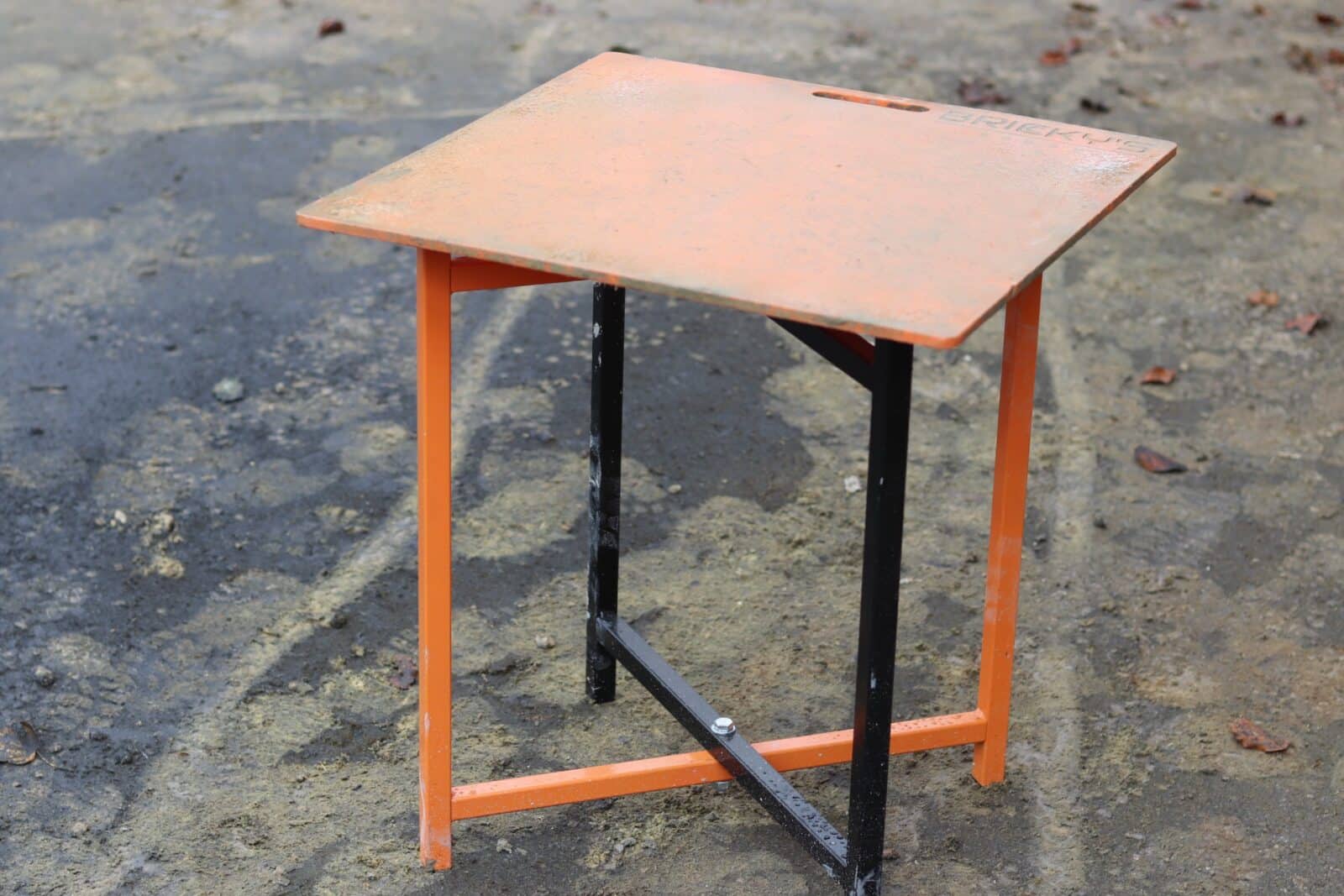
A mortar board is a flat working surface used to hold mortar during bricklaying, blockwork and other masonry work. The stand raises the board from ground level so you can keep the mortar closer to a practical working height.
This matters during repetitive work. The Health and Safety Executive says that brick and block laying at ground level can involve repeated bending to the mortar spot board and materials. Its guidance notes that raising the mortar spot board can reduce repeated bending.
A good Bricklayer Mortar Board setup should therefore do more than hold mortar. It should fit naturally into the way you work.
Why Height Matters When Bricklaying
Here’s the thing: a board that sits too low can make you bend repeatedly throughout the day.
The HSE case study reports that repeated bending or stooping can contribute to problems affecting the back, neck and knees. It also notes that raised mortar boards can make work easier and more comfortable.
That does not mean one height suits every bricklayer. Your own height, wall height, site layout and working position all matter.
When choosing your mortar board stand, ask yourself:
- Where do I normally position my mortar?
- How often do I move the board?
- Am I mainly working indoors or outdoors?
- Does the height let me reach the mortar without excessive bending?
The aim is simple: keep the mortar accessible without making your working position awkward.
What to Look For in a Mortar Board Stand
Not every stand is built for regular trade work. Before you buy, check these practical points.
Strong construction
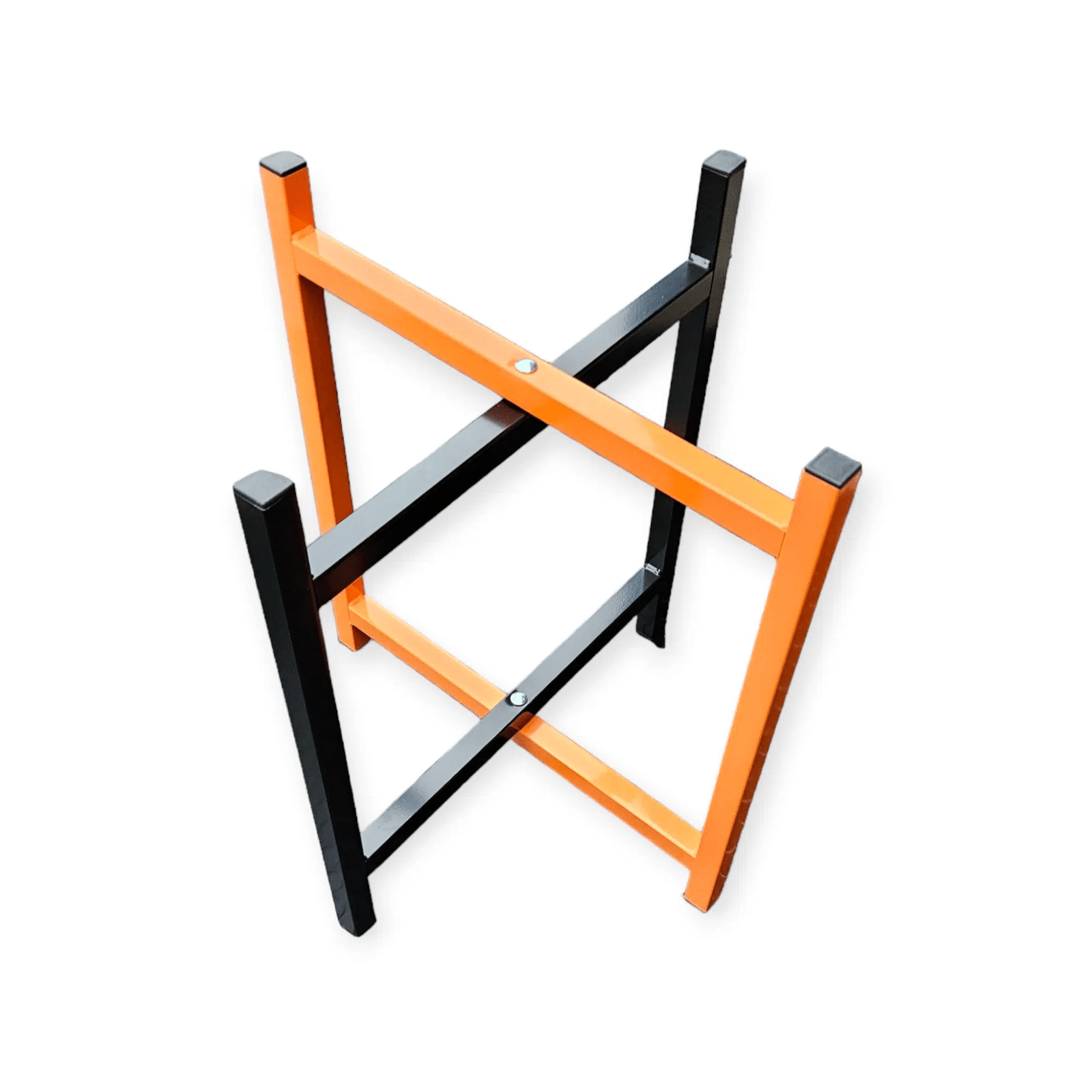
For daily site work, look for a frame made from a durable material. Bricky’s Buddy lists its 600mm and 750mm stands as being made from heavy-duty steel with a powder-coated finish.
Stable feet
A stand needs to sit securely on a suitable, level surface. The 600mm and 750mm models include rubber and plastic foot inserts, which are designed to add stability and protect the surface.
Easy transport
If you work across different areas of a site, portability matters. A foldable frame can be easier to carry and store in a van.
Board compatibility
Always check whether the stand supports the board you plan to use. The 600mm Bricky’s Buddy stand is listed as suitable for both spot boards and mortar boards.
600mm vs 750mm: Which Height Should You Choose?
There is no single height that is right for every bricklayer. Your working position should guide the choice.
| Feature | 600mm Stand | 750mm Stand |
| Height | Lower | Higher |
| Best suited to | Lower working setup | Higher working setup |
| Main point to check | Reach and comfort | Reach and comfort |
| Portability | Foldable design | Foldable design |
| Construction | Heavy-duty steel | Heavy-duty steel |
Bricky’s Buddy currently offers both 600mm and 750mm mortar board stands, giving tradespeople two height options. The 600mm model measures 600 x 500mm, while the 750mm model is intended for professional bricklaying and masonry work.
A simple tip: stand in your usual working position and consider where the mortar needs to sit. Do not choose a taller stand simply because it sounds better. Choose the height that works with your actual job.
Mortar Board vs Spot Board
You may hear bricklayers use the terms mortar board and spot board when talking about the working surface used for mortar.
The important point when buying is not just the name. Check the manufacturer’s product information to confirm what the stand supports.
For example, Bricky’s Buddy’s 600mm Spot Board Stand is listed as suitable for spot boards and mortar boards and for indoor and outdoor construction work.
Its double-sided mortar board is made from non-absorbent material, has a 10mm thickness and weighs about 3.4kg. It also has a carry handle and can be used for bricklaying, blockwork and masonry applications.
For a bricklayer who regularly moves between work areas, those details can be more useful than simply looking at the product name.
Choosing the Right Setup for Your Work
Before buying, run through this quick check:
- Check the height against your normal working position.
- Check the board size against the stand.
- Check stability and the type of surface where you normally work.
- Check portability if you move around different sites.
- Check the material for regular trade use.
- Check cleaning and storage so the equipment remains practical after the job.
You can also build your wider bricklaying kit around the same practical approach. Bricky’s Buddy’s range includes a Tool Belt for Bricklayers, Profile Props, tool bags and other trade equipment.
Set Up Your Mortar Area Before the First Brick
The best mortar board and stand is not necessarily the biggest or most expensive one. It is the setup that gives you a stable surface, suitable height and easy access to mortar during your normal work.
If you are replacing an old stand, take five minutes to check the board size, working height, frame, feet and storage needs before ordering. That small check can save you from buying equipment that does not suit your site.
If you are ready to improve your bricklaying setup, take a look at the mortar boards and stands available from Bricky’s Buddy and compare the 600mm and 750mm options with your working needs.
FAQs
What is a mortar board used for?
A mortar board provides a working surface for holding mortar during bricklaying, blockwork and masonry tasks.
What should I look for in a mortar board stand?
Check its height, stability, construction, portability, board compatibility and suitability for your normal work area.
Is a 600mm or 750mm stand better?
Neither is automatically better. Choose the height that suits your own working position, site conditions and the height at which you normally handle mortar.
Can a raised mortar board reduce bending?
Raising the board can reduce the need to repeatedly bend towards ground-level mortar. The HSE specifically identifies raised mortar spot boards as one way to reduce repeated bending.
Can a Spot Board Stand hold a mortar board?
Some stands are designed for both. Always check the manufacturer’s specifications before pairing a board with a stand. Bricky’s Buddy’s 600mm model is listed for both spot boards and mortar boards.